
Is CSAT Still Relevant for IT Services?
For decades, Customer Satisfaction (CSAT) has been the default metric for measuring service quality. From retail stores to ride-sharing apps, and of course IT service desks, CSAT has been widely used to gauge how customers feel about an interaction. But while CSAT is simple and familiar, many IT organizations are starting to ask an important question: Is CSAT still enough?

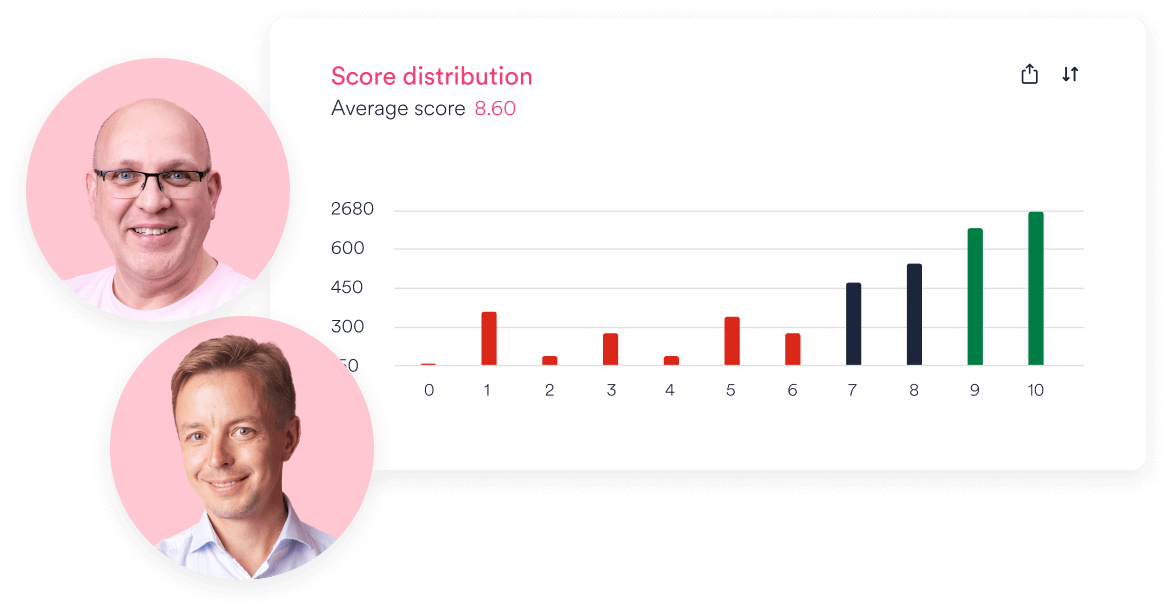
The origins of CSAT
CSAT dates back to the 1950s, when organizations began measuring customer perception alongside operational performance.
The idea was straightforward: instead of focusing only on engineering or technical metrics, companies also needed to understand customer experience.
Over time, the method became standardized: after a service interaction, customers receive a short survey asking them to rate their experience, usually on a scale from 1 to 5.
In IT services, this format became extremely popular. It’s easy to deploy, report, and understand.
But that simplicity can also be misleading.
When CSAT becomes a contractual target
In many organizations, CSAT is embedded into service contracts and SLAs. Vendors might be required to maintain a satisfaction score above a certain level, say 3.7 or 4.1 out of 5.
On paper, this seems reasonable. If the score is high, the service must be good.
In reality, things often work differently.
When a score becomes a contractual requirement, it can change behavior.
Teams may adjust how surveys are sent, which interactions are measured, or even who receives them.
Then, the organization consistently hits the target, but nothing really improves. The metric becomes something to report rather than something to learn from.
The problem with a single number
Another challenge with CSAT is that it usually produces a single average score.
That number might appear reassuring. For example, 4.1. out of 5 sounds good, right?
But what does that actually mean?
- Which services are causing frustration?
- Where are employees losing productivity?
- Which teams are struggling?
- What specifically needs to change?
CSAT rarely answers these questions because it offers no context.
It tells you how people felt about an interaction, but not why they felt that way or what to do next.
Why organizations are moving beyond CSAT
Over the past few years, more IT leaders have realized that measuring satisfaction alone isn’t enough.
Modern IT environments are more complex, distributed, and business-critical than ever. When IT services fail or work inefficiently, the impact isn’t just frustration, it’s lost productivity.
That’s why many organizations are shifting toward IT experience management (ITXM).
Instead of relying on a single satisfaction score, experience management combines multiple layers of insight, such as:
- Experience indicators (communication, resolution quality, speed)
- Employee productivity impact
- Operational ITSM data
- Qualitative feedback from users
Together, these data points provide something CSAT cannot: context.
The role CSAT can still play
Does this mean CSAT is obsolete?
Not necessarily.
CSAT still offers value as a quick temperature check. It’s familiar to users, easy to collect, and useful for tracking high-level trends.
But it shouldn’t be the only measure guiding IT decisions.
Think of CSAT as a signal, not the full story.
To truly improve service experience, organizations need to understand the drivers behind satisfaction, the impact on employee productivity, and the specific areas where improvements will matter most.
From measuring satisfaction to improving experience
The goal of measurement should never be the number itself, the goal should be better outcomes.
When IT teams move beyond CSAT and start focusing on experience, something important happens: the conversation shifts.
And that’s why the future of IT measurement isn’t just about satisfaction, it’s about experience.

One insight a month, in your inbox.
New articles, benchmark data, and customer stories. No fluff.