

»Topics
»Incident Management
»Topics
»Incident Management
Topic: Incident Management (ITIL)
Incident management that’s fast and feels fixed
ITIL’s goal for Incident Management is simple: restore normal service as quickly as possible—while continuously improving how you do it.
HappySignals helps you do exactly that by adding the missing piece to incident operations: what employees actually experience, connected to what happened in your ITSM tool, like ServiceNow, BMC Helix or JIRA.
Pinpoint what’s really slowing resolution
Prioritize incidents by productivity impact, not ticket volume
Prove continual improvement with trend-backed insights
How HappySignals helps with
Incident Management?
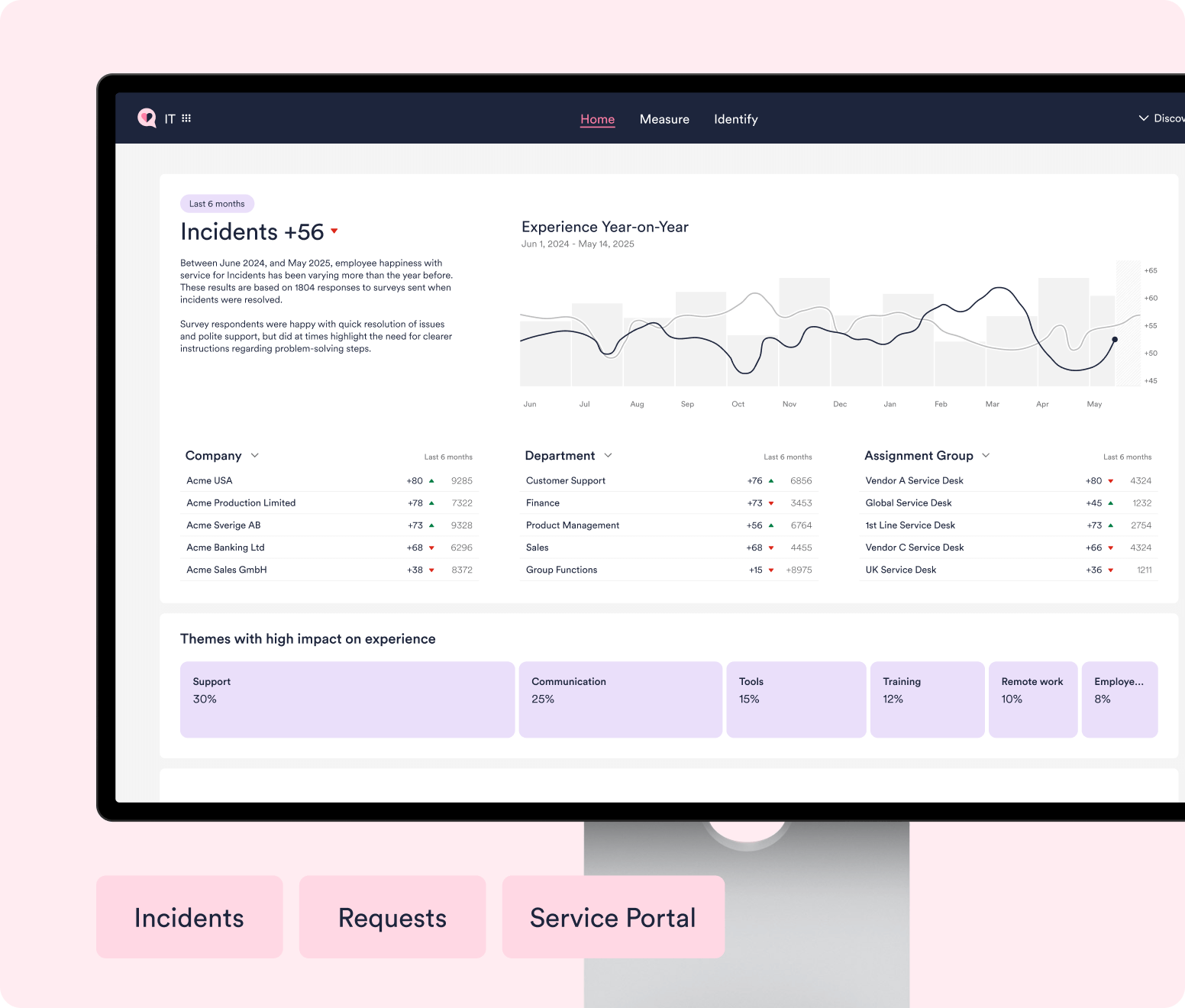
Detect experience issues early (before they become major incidents)
HappySignals continuously captures feedback from real incident journeys and shows you where experience starts turning red—by service, channel, location, team, or vendor.
Outcome: earlier visibility into “silent pain” that monitoring and SLAs miss.
Features
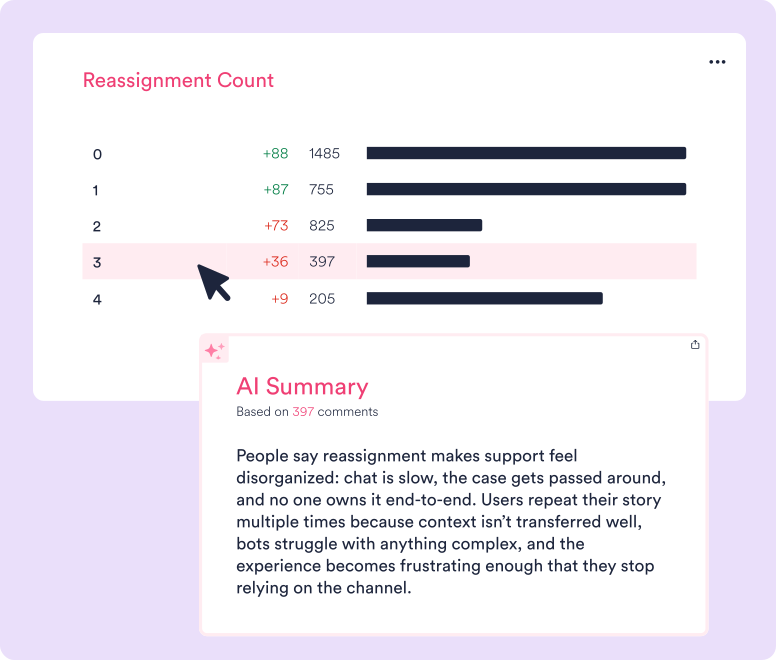
Restore service faster by removing the real blockers
HappySignals links experience to operational incident data so you can pinpoint what slows resolution down in practice:
- Reassignments and handoffs driving lost time
- Diagnosis delays and poor categorization
- Channel friction (portal vs chat vs phone)
- “Not solved” patterns from open feedback and AI summaries
Outcome: better routing, fewer bounces, faster recovery.
Use Cases
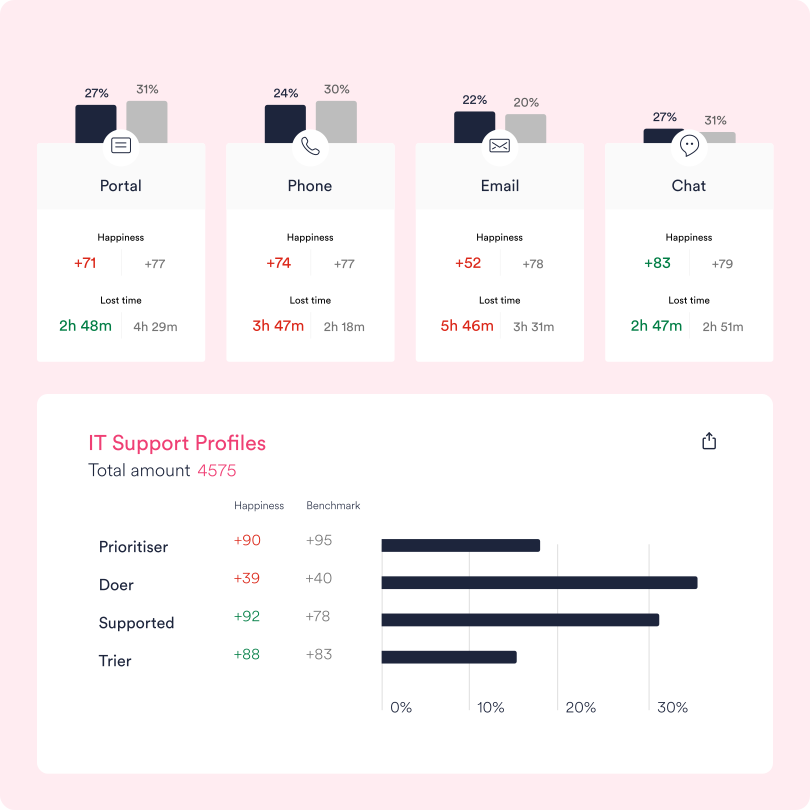
Improve incident handling with a benchmarked, outside-in view
Seeing your incident experience trend is useful — but how do you know if it’s actually good?
HappySignals’ Global IT Experience Benchmark gives you an automatically updated reference point, so you can compare your incident experience and lost time against a trusted global baseline. See where your Incident Management is truly leading (or lagging) by service, region, channel, and incident journey stage—and focus improvements where they’ll reduce frustration and restore productivity the most.
Features
Learn how HappySignals works to improve your Incident Management?
Go beyond “incident CSAT” and see what actually broke
A post-incident score doesn’t tell you why people struggled. HappySignals captures experience right after incidents and connects it to the operational reality—so you can fix the real causes behind frustration and lost time.
Standardized incident surveys—ready out of the box
Get research-backed incident surveys with a consistent methodology, so your results are comparable over time and benchmarkable by service, region, channel, and resolver group—without building your own survey program.
Get consistently high response rates—without survey fatigue
Incident feedback only works if people actually respond. HappySignals is designed to collect reliable, continuous data at scale, so your Incident Management decisions are based on facts—not a handful of answers.
AI turns incident comments into themes you can use
Open feedback is where the truth lives—but reading it doesn’t scale. Built-in AI summarizes comments into themes, highlights trends, and lets you filter by sentiment and incident context in minutes.
Measure productivity impact with Lost Time, not just MTTR
Restoring service is the goal—but the business cares about time lost. HappySignals quantifies incident impact through Lost Time, helping you prioritize major improvements by outcome, not ticket volume.
Segment incident experience to find the real pain pockets
Incidents don’t affect everyone the same way. Break down experience by hybrid work (remote/onsite), role, preferences with AI, technical capability, and whether they are in a customer-facing role to identify where impact is highest—and prioritize the fixes that matter most.
Leading IT teams drive their ITSM with experience data






Built for Incident Management teams
For Process Owners
Get a clear, real-time view of where incidents hurt experience most—by service, channel, resolver group, and region—so you can reduce handoffs, speed up recovery, and improve comms with confidence.
For Service Desk Manager
See which incident types and channels create the most friction and lost time for employees, then optimize routing, self-service, and knowledge so more incidents get solved faster on the first touch.
For IT Service Owner
Identify recurring incident pain points and their operational drivers, then prioritize fixes by business impact. Track whether changes actually improve experience and reduce lost time over time.
.png)
Ready to see Experience Intelligence in action?


Incident Management FAQ: How does HappySignals improve ITIL incident outcomes?
We support the major ITSM platforms. You can find the full list on our integrations page.
Traditional incident CSAT gives you a score. HappySignals gives you the why—by combining standardized survey data with incident metadata and open feedback. You can pinpoint what to change (routing, ownership, knowledge, comms, automation) and prove whether it worked.